Building an influencer
marketing platform from scratch
I joined Kolsquare as its first and only designer, when the company had no brand and a bootstrapped product embryo. Reporting directly to the CEO and working with a team of four developers, I built the three foundations a startup needs to sell: the brand identity, the design system, and the product itself, from the influencer search engine to a free Chrome extension that became our acquisition engine. The mandate was simple: ship an MVP fast enough to sign our first clients, then turn those clients into pioneers who would help us design the rest.
The problem
Brands were spending on influencers blindly. And Kolsquare had nothing to show them yet.
In 2018, influencer marketing was booming, but brands were running it on gut feeling. They had no tool to find the influencers that actually matched their audience, and no data to prove what a campaign had delivered once it was over. Selection happened through spreadsheets, agency networks and follower counts that said nothing about who was really listening.
Kolsquare wanted to bring data to that market. But the starting point was a blank page: no visual identity, no design language, and a bootstrapped product that the founders could demo, but not sell. Everything a B2B startup needs to earn a client's trust had to be created, at the same time, by one designer.
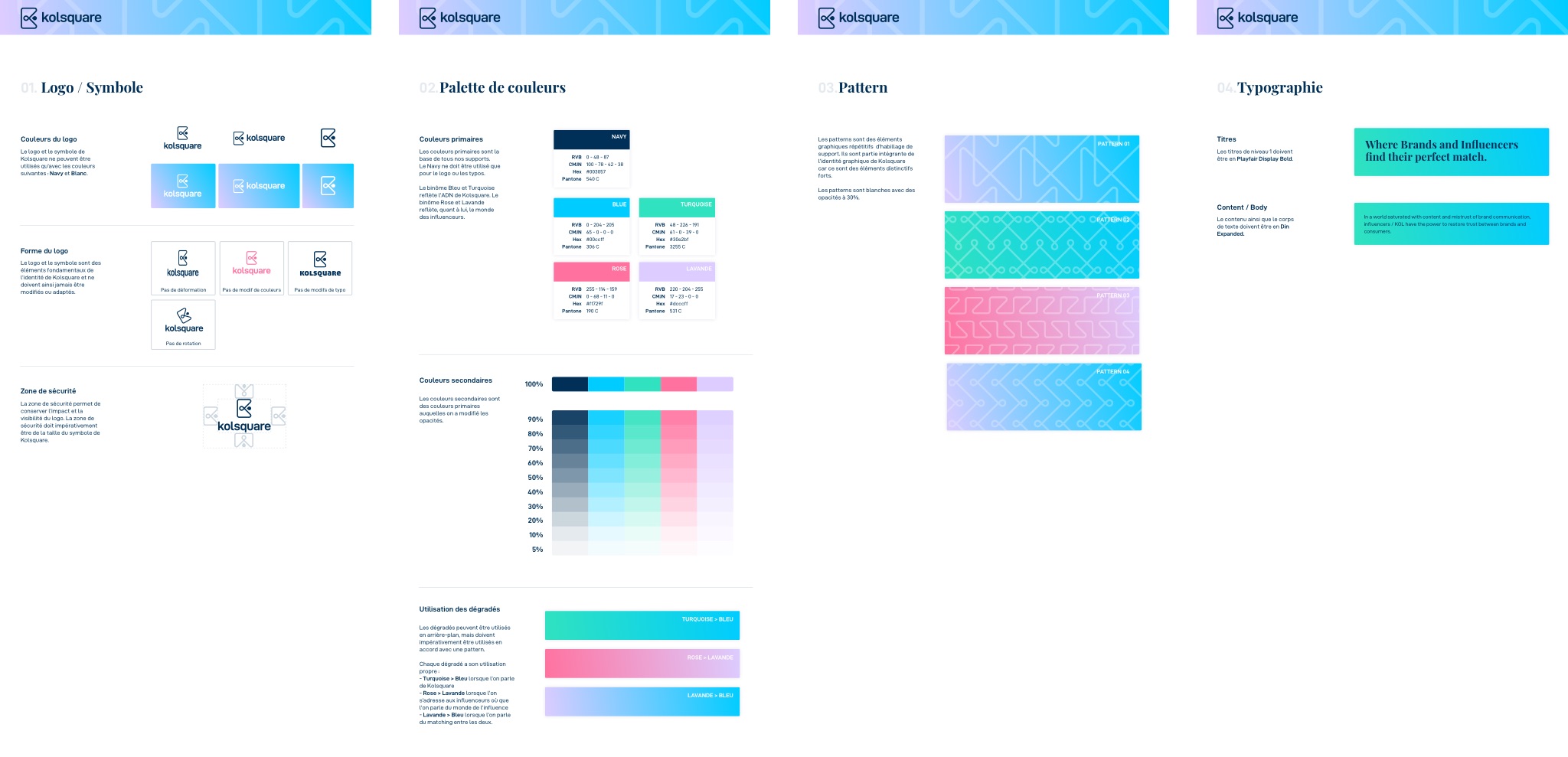
"Where Brands and Influencers find their perfect match."
Kolsquare brand promise, defined in the brand guidelinesThe initiative
Three foundations, built in parallel, with one rule: MVP first.
Time was the main constraint. Speed mattered more than polish, because the goal was to sign clients quickly and bring them on board as pioneers: early users who would shape the product with us. Every design decision was weighed against one question: does this help us sell, or help a client succeed, this quarter?
Core goals
- Create a brand credible enough for international advertisers, from logo to sales collateral
- Ship a first version of the platform that solves the two core jobs: finding the right influencers and proving campaign impact
- Turn early clients into co-builders, with a feedback loop close enough to replace large-scale testing
- Systematize as we grow, so that four developers and one designer could keep shipping without the interface drifting
Discovery
Few clients, close relationships: a feedback loop instead of A/B tests.
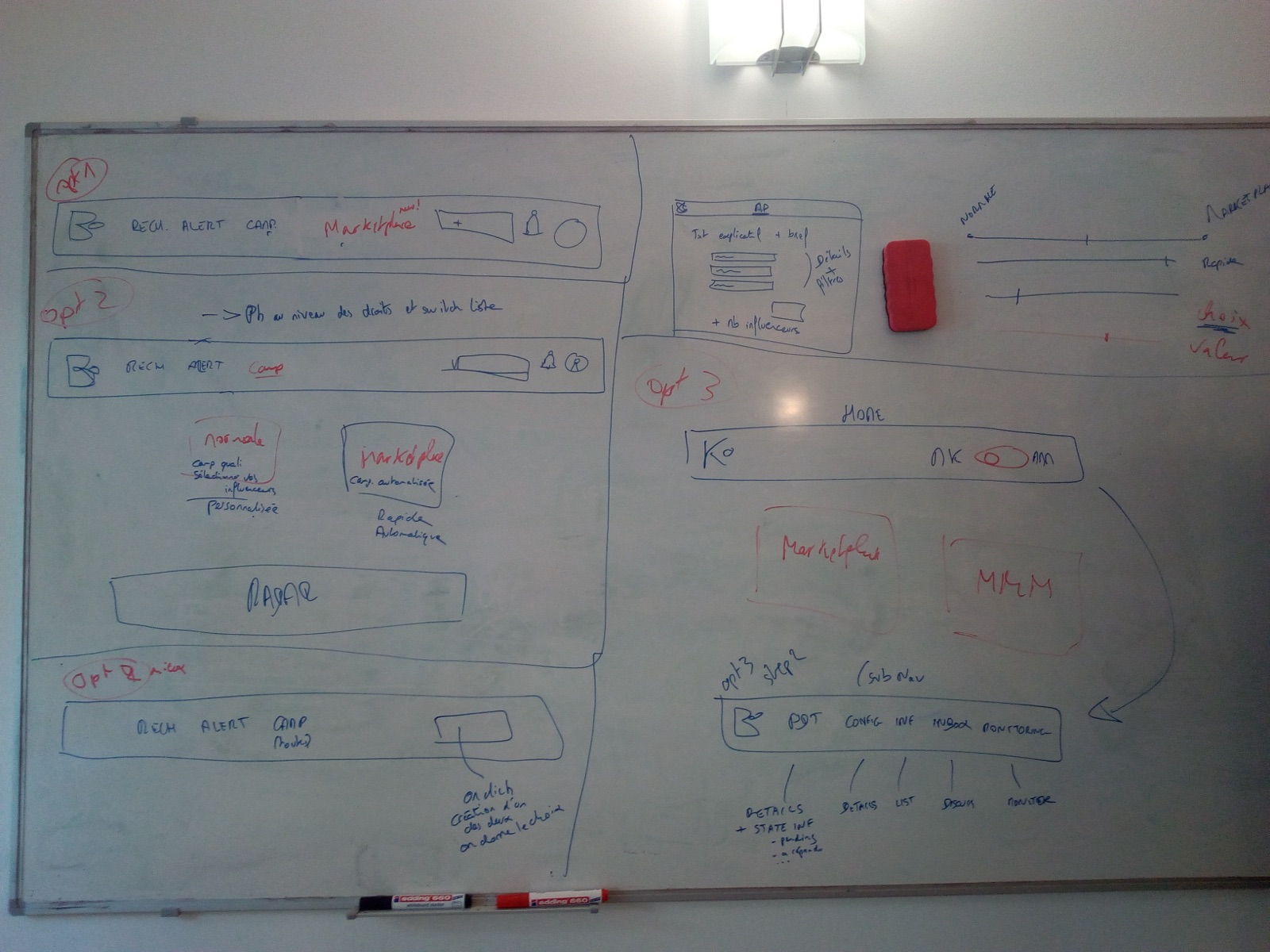
With a small client base, quantitative testing made no sense. What we had instead was a very close relationship with every client. I ran user interviews, tested prototypes and early releases directly with them, and used sales feedback as a constant source of signals.
That sales feedback needed filtering. Some requests were one-off needs or ultra-specific to a single account, and following them would have pulled the product away from its direction. Part of my job was to separate the recurring problems from the individual wishes, and to turn the recurring ones into simple features that worked for everyone.
The solution
A search engine for influencers, built on data brands could trust.
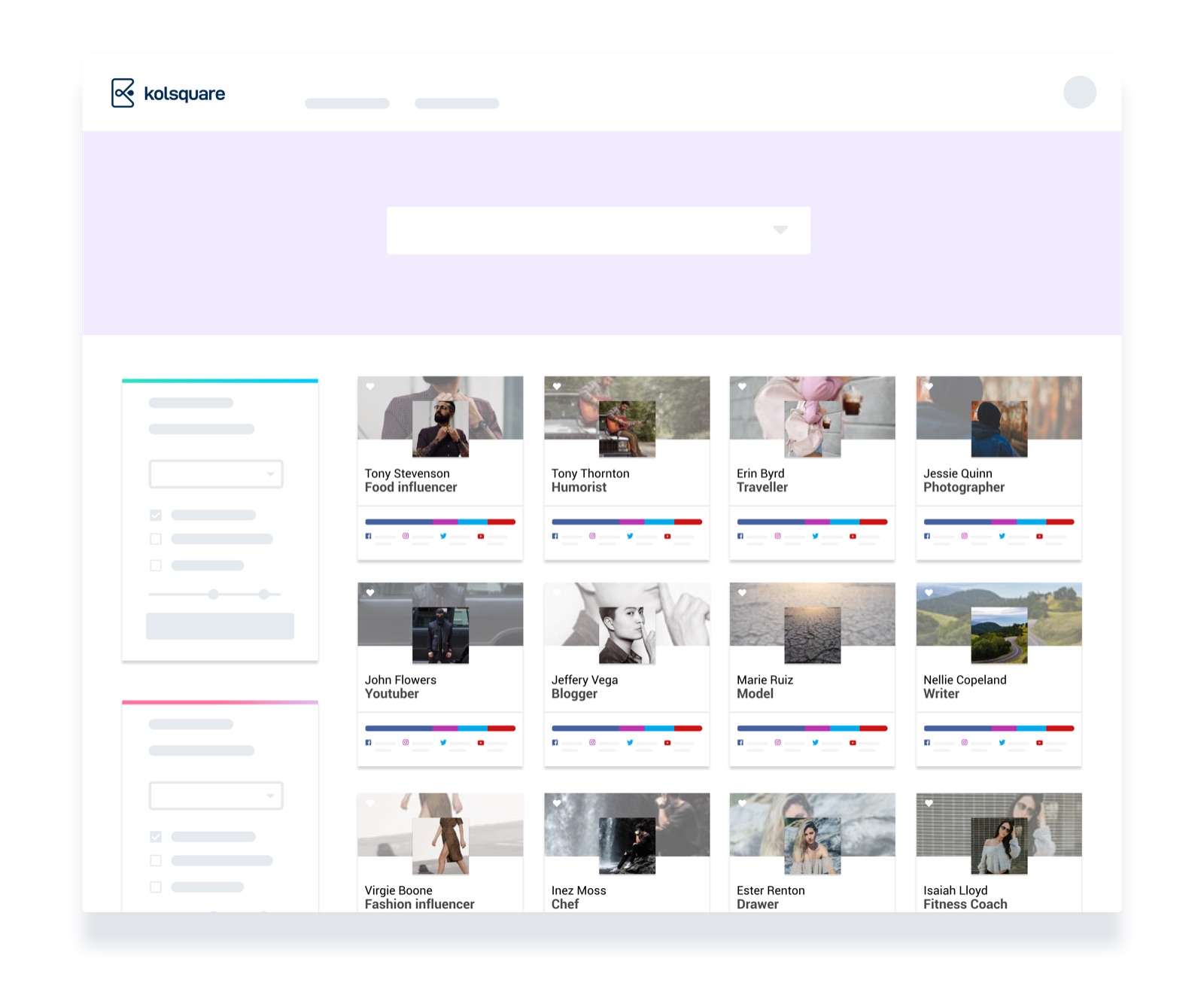
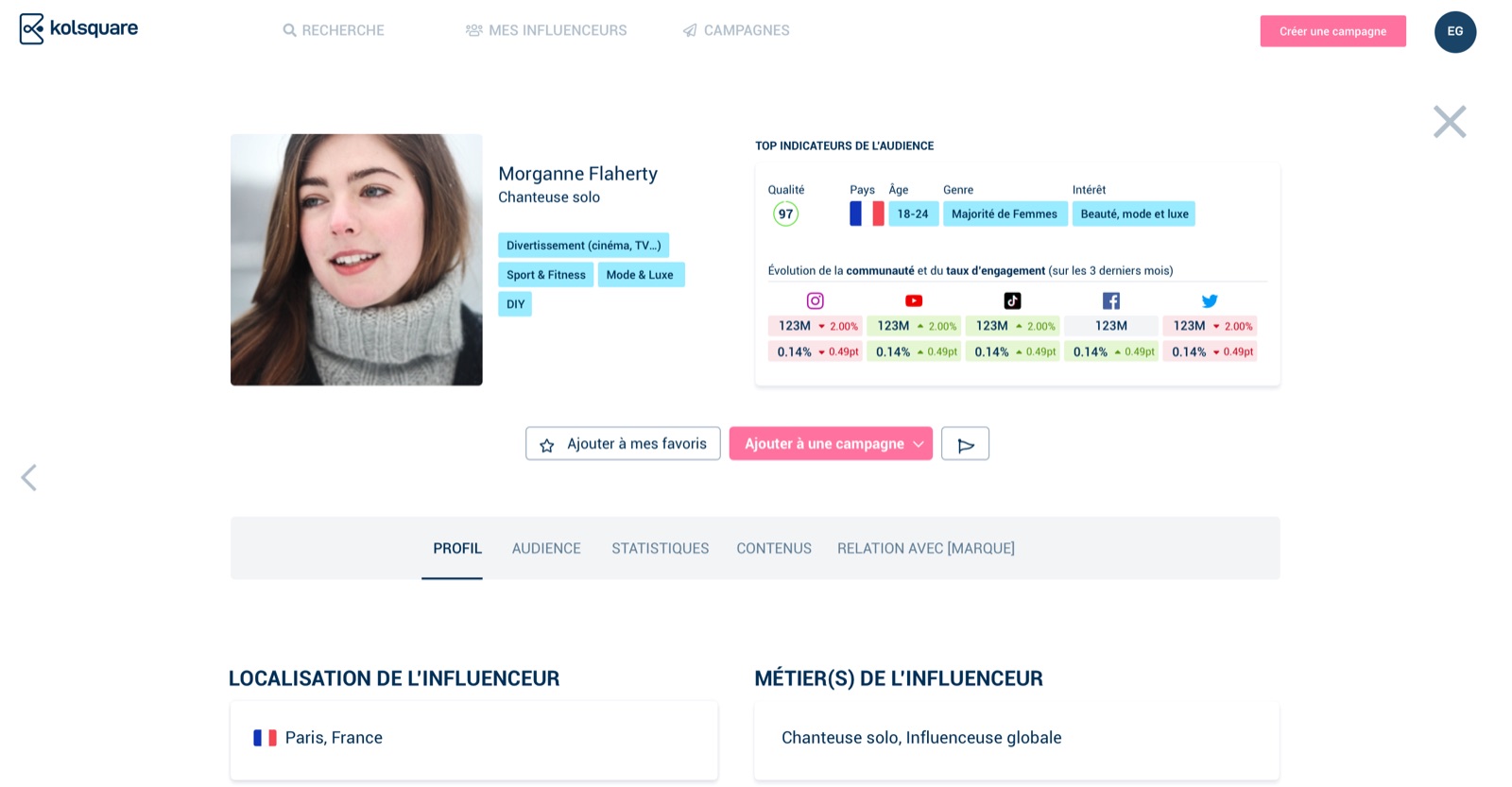
The platform was built around one promise: help a brand find the right voices, and know whether they are worth it. Behind the interface, Kolsquare collected public data from social networks. My job was to turn that raw data into decisions a marketing manager could make in minutes.
Key features shipped
- Social network data collection: public data gathered from Instagram, YouTube, Facebook, Twitter and later TikTok, the raw material behind every screen.
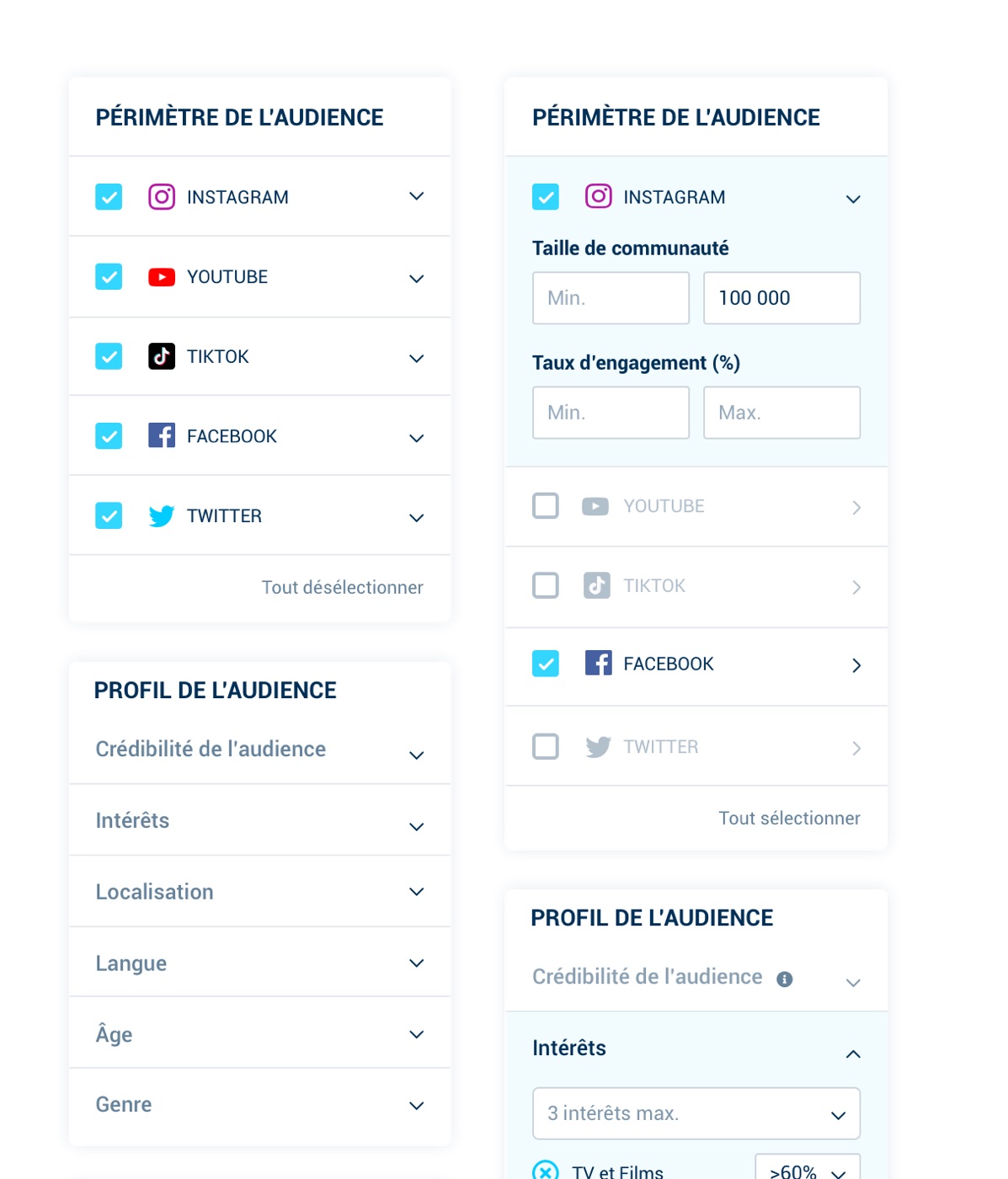
- Influencer profiles with community quality: not just follower counts, but audience credibility, engagement rate, demographics, interests and languages, so brands could spot fake or irrelevant audiences.
- Search with filters by social network, community size, community quality and theme, the core of the product.
- Search by brand name: find which influencers already talk about a brand or its competitors, a shortcut to the most relevant profiles.
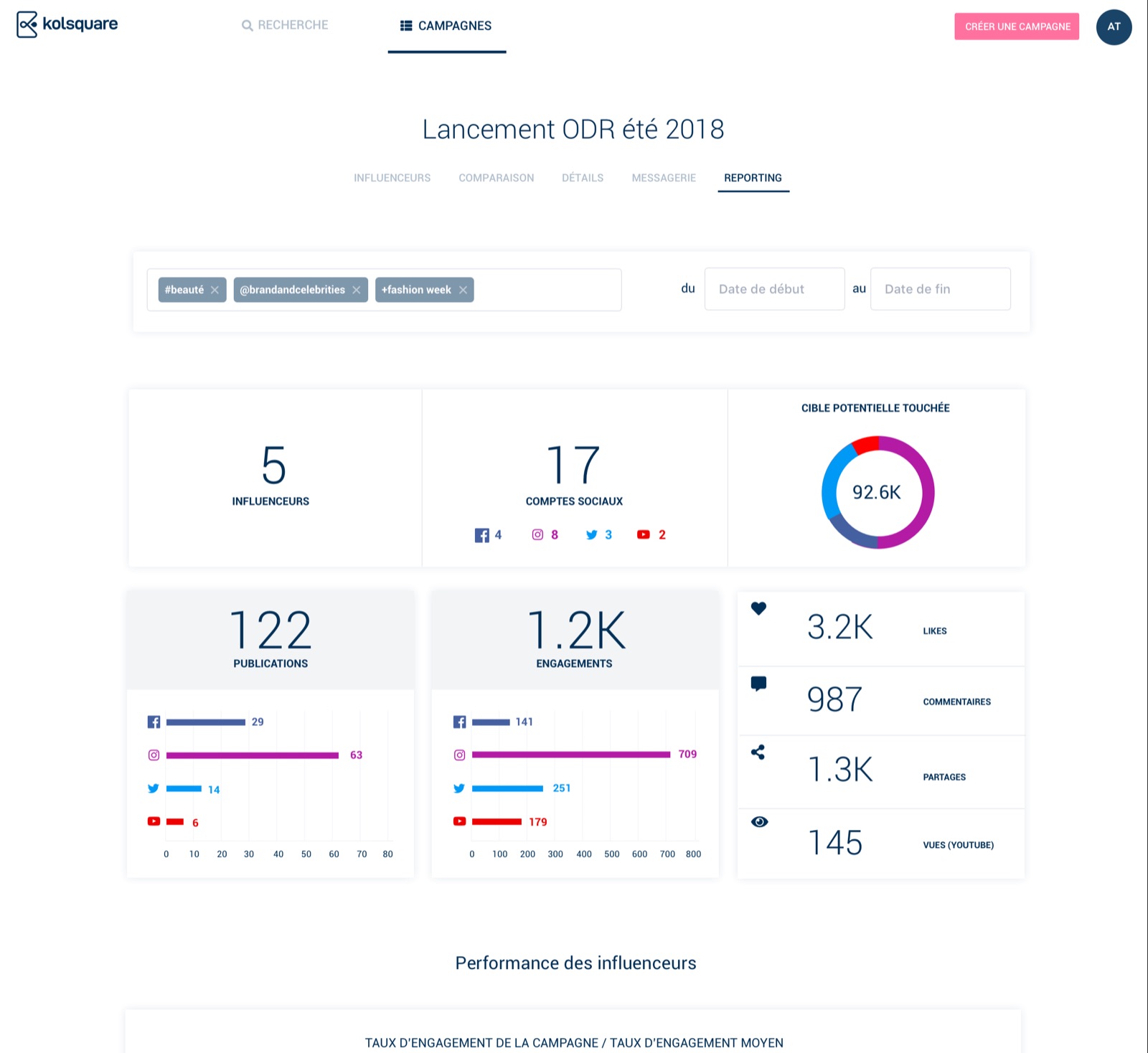
- Campaign reporting: posts, engagement and reach consolidated per campaign, the proof of impact brands were missing.
A free Chrome extension as the acquisition engine
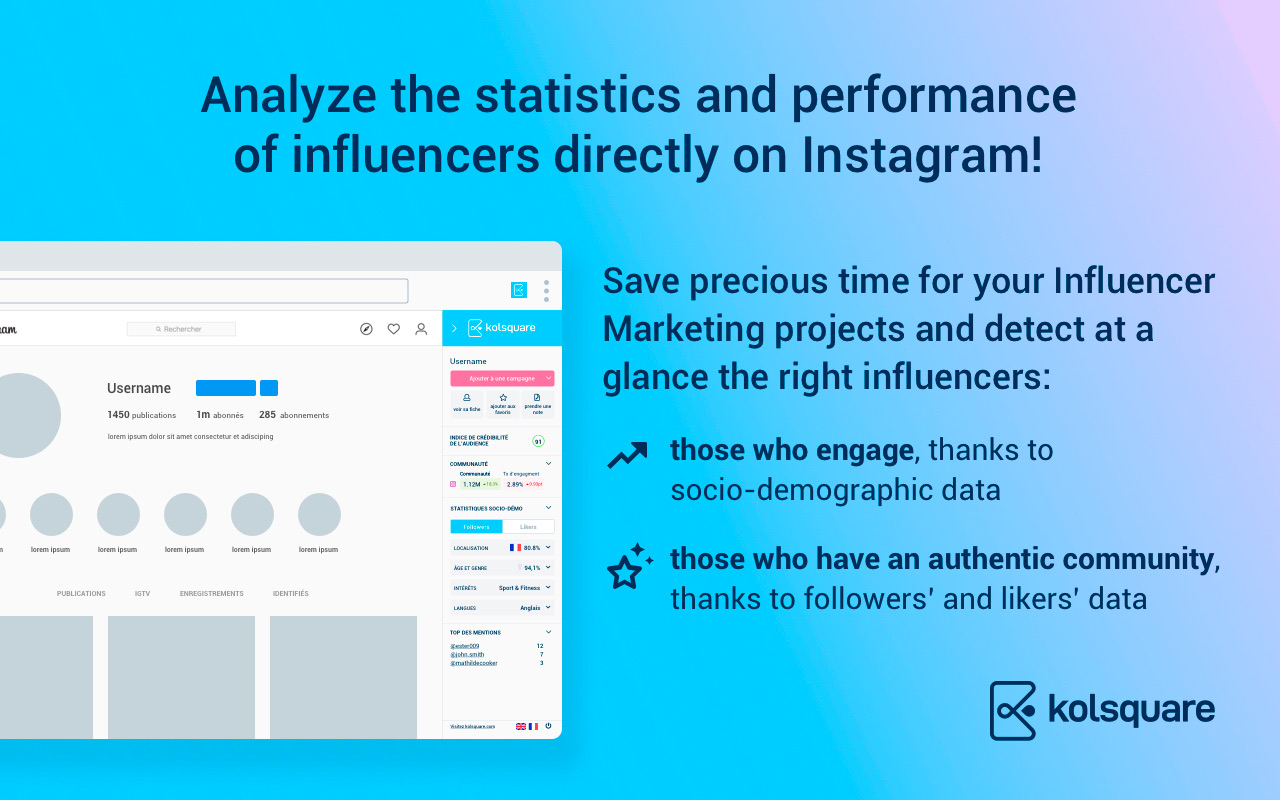
To reach brands before they even booked a demo, we designed a free Chrome extension that displays Kolsquare's audience data directly on Instagram profiles. It gave marketers a taste of the product where they already worked, and opened the door to the paid platform. I designed the extension and its Chrome Web Store presence, localized in five languages. It is still available today.
Design system
From a brand to a shared language for one designer and four developers.
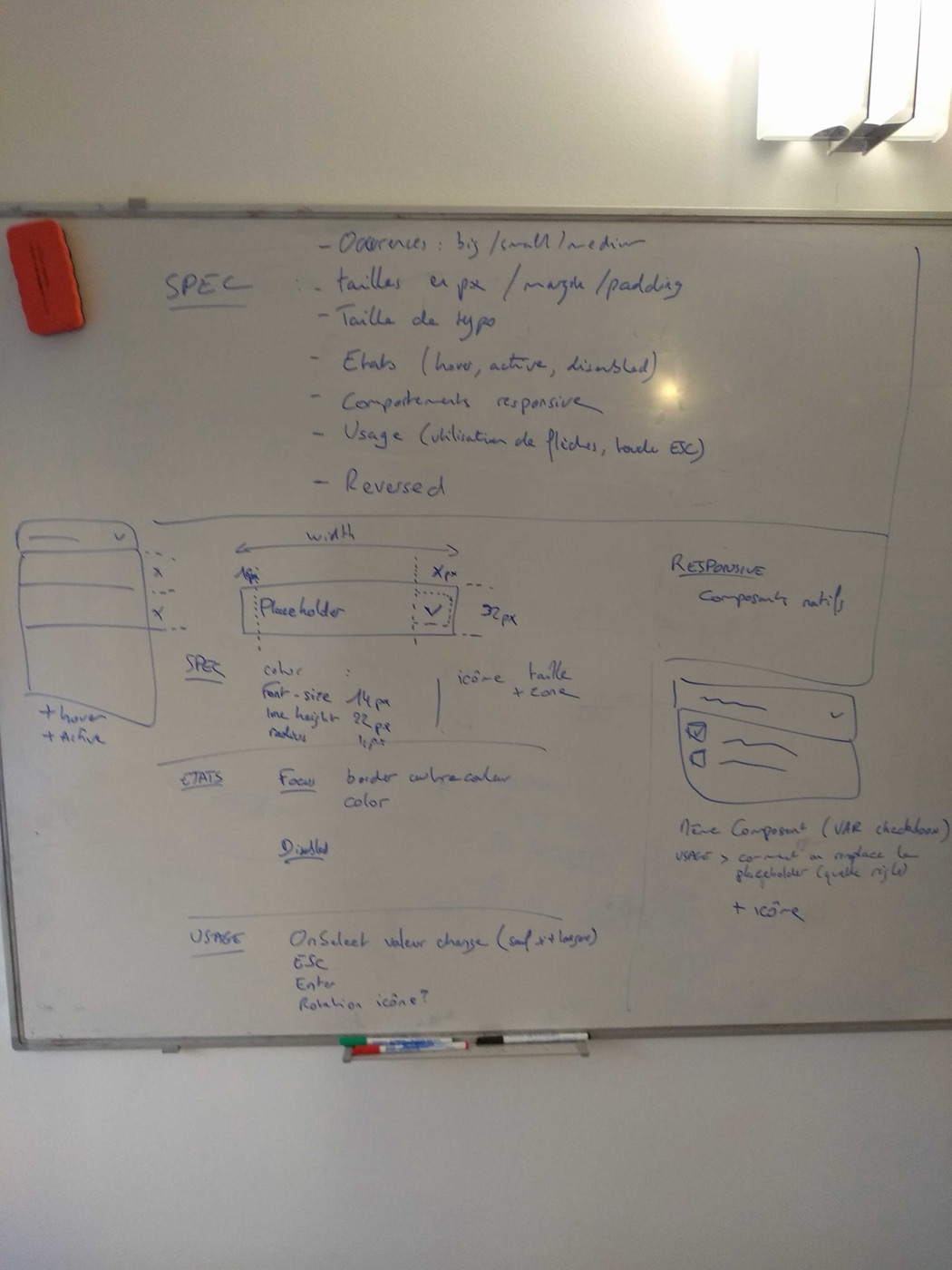
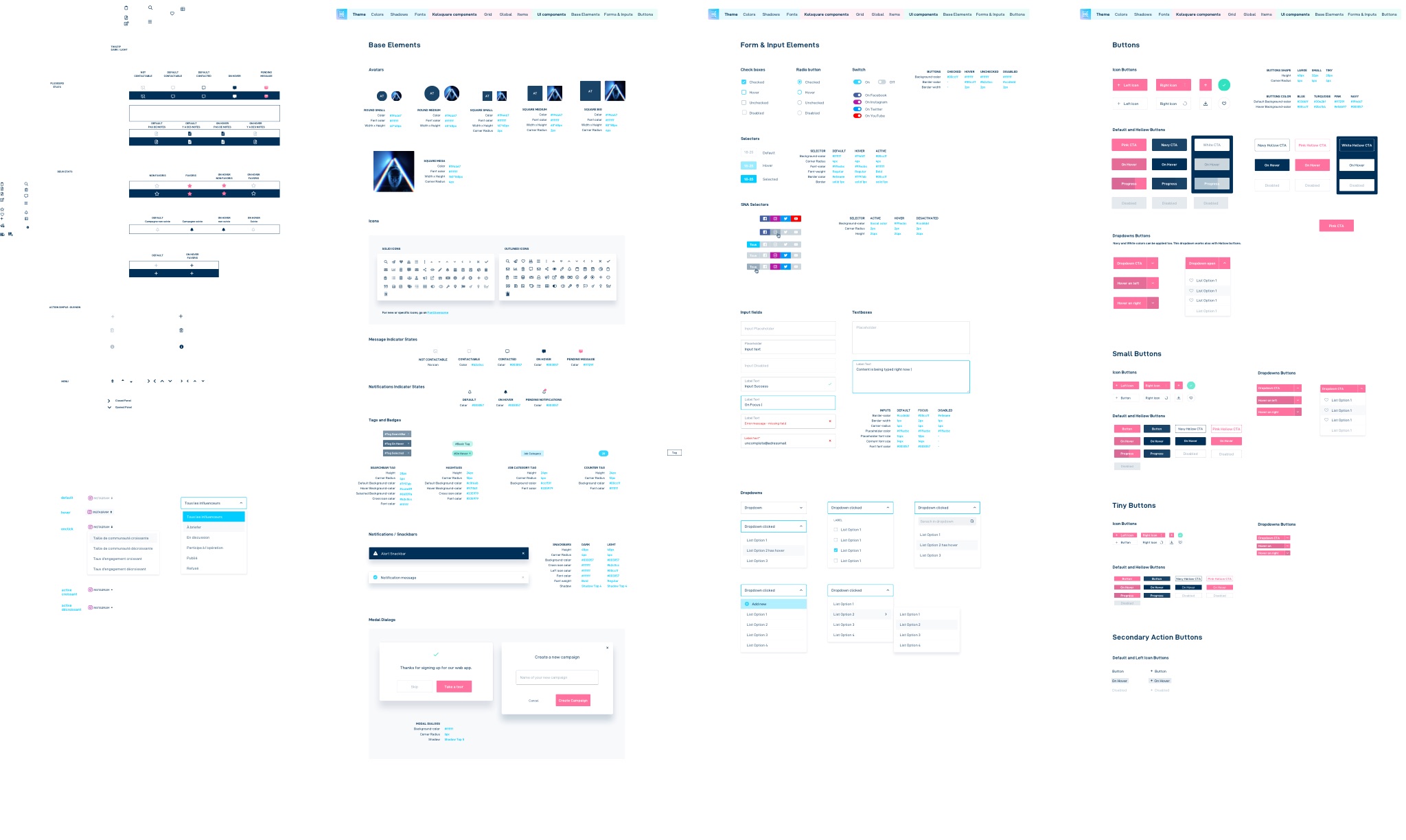
As the product grew, speed started to create inconsistency. I turned the brand into a component library: buttons, form inputs, dropdowns, tags, notifications, modals and icons, each specified with its sizes, states and behaviours. Specs were defined in workshops with the developers, so that the library matched how components would really be built.
The design system came after the first version of the product, not before. It helped us keep shipping fast, but it also taught me the main lesson of this project (see below).

Navigating complexity
When your data comes from scraping, design has to absorb the uncertainty.
The hardest problems weren't on the screens. They came from the data underneath them, and the design had to make that fragility invisible to clients.
Impact
From a blank page to more than 100 European clients in two years.
What I'd do differently
Lay the foundations on day one, and make them replicable.
Kolsquare taught me what it takes to go from nothing to a product people pay for. It also showed me where I would work differently today.