Case study · Product design · Doctolib Team

Getting doctors
off WhatsApp

RoleProduct Designer (only designer in a feature team: 1 PM, 4 developers)
Timeline2021 · from a mobile MVP to a full product
ScopeDoctolib Team · Web & mobile · France & Germany, then Italy · Hospitals, specialists, nurses, GPs
My role in this initiative

I was the only designer in the feature team that turned a mobile-only MVP into Doctolib Team, Doctolib's secure messaging app for healthcare professionals, alongside a Product Manager and four developers. I led discovery in hospitals and with practitioners across specialties, and designed the product end to end, from one-to-one messaging to groups and patient cases. Then the data taught us the real challenge: not getting doctors to see the product, but getting them to send their first message.

The problem

Doctors needed to talk about patients. Their best tool was a personal WhatsApp.

Healthcare professionals had no advanced communication tools. So in real life, they used what was in their pocket. In a hospital emergency department, a radiologist sending a patient to surgery would take a photo of the X-ray with their phone and send it to the surgeon on WhatsApp. Fast and effective, but patient data ended up on a consumer app with servers outside Europe: a major security and compliance breach.

The official alternatives didn't fit how doctors work. Email inboxes are capped, and a few medical images are enough to fill them. Doctors' email addresses are hard to find with the tools they have. And in large facilities, doctors are rarely at their desk: they move between wards, operating rooms and consultations all day.

The frustration was shared by every type of practitioner, from surgeons to GPs. A city GP and a hospital specialist who don't know each other may need to discuss the same patient, or simply exchange a medical report, and had no easy way to reach each other.

The initiative

A WhatsApp-like experience, built for healthcare from the ground up.

Doctolib decided to build its own messaging tool for healthcare professionals, and to make it free, because a messaging app is only useful if everyone is on it.

Core goals

  • Secure patient data: GDPR compliance and end-to-end encryption, with health data staying where it belongs
  • Keep doctors in their tool: messaging integrated into Doctolib, instead of yet another app on the side
  • Connect doctors who don't know each other: a city GP, a hospital surgeon and a nurse should find each other in seconds
  • Make it as familiar as WhatsApp, so that switching costs nothing

From MVP to product

1
Dec 2020 · The MVP
Mobile only: search among users by name, specialty and city, one-to-one messaging and end-to-end encryption. A second iteration a few weeks later added document and photo sharing.
2
2021 · Doctolib Team
The full scope I designed: desktop, group discussions, invitations, search and patient cases, scaled first with pioneer users, then prepared for launch in France and Germany.
3
2022 · Rollout at scale
Deployed to all eligible Doctolib Pro users in France and Germany, including dozens of hospitals in France.
4
2023 onwards · Doctolib Siilo, then Doctolib Connect
After joining forces with Siilo, a Dutch medical messaging company, the product became Doctolib Siilo, then Doctolib Connect.

Discovery

One need, many ways to communicate.

100+
Healthcare professionals met across France and Germany, plus a dedicated discovery when opening Italy
4
User groups met: hospital teams, specialists, nurses, GPs
100s
Of pioneer users in the first scale phase (spring 2021)

The need first emerged in hospitals, so that's where we started. We then met practitioners across specialties, and quickly saw that "communication" meant something different for each of them:

  • Hospital teams needed to hand over patients quickly between departments, often on the move.
  • Nurses needed to share information between rotations, and with the patient's GP to set up care plans.
  • Specialists, like a gastroenterologist, mostly sent reports and recommendations to the GP. With Doctolib, the report could be generated and sent directly from the interface: no letter, no email.
  • GPs needed to stay in the loop on their patients' care, across all of these exchanges.
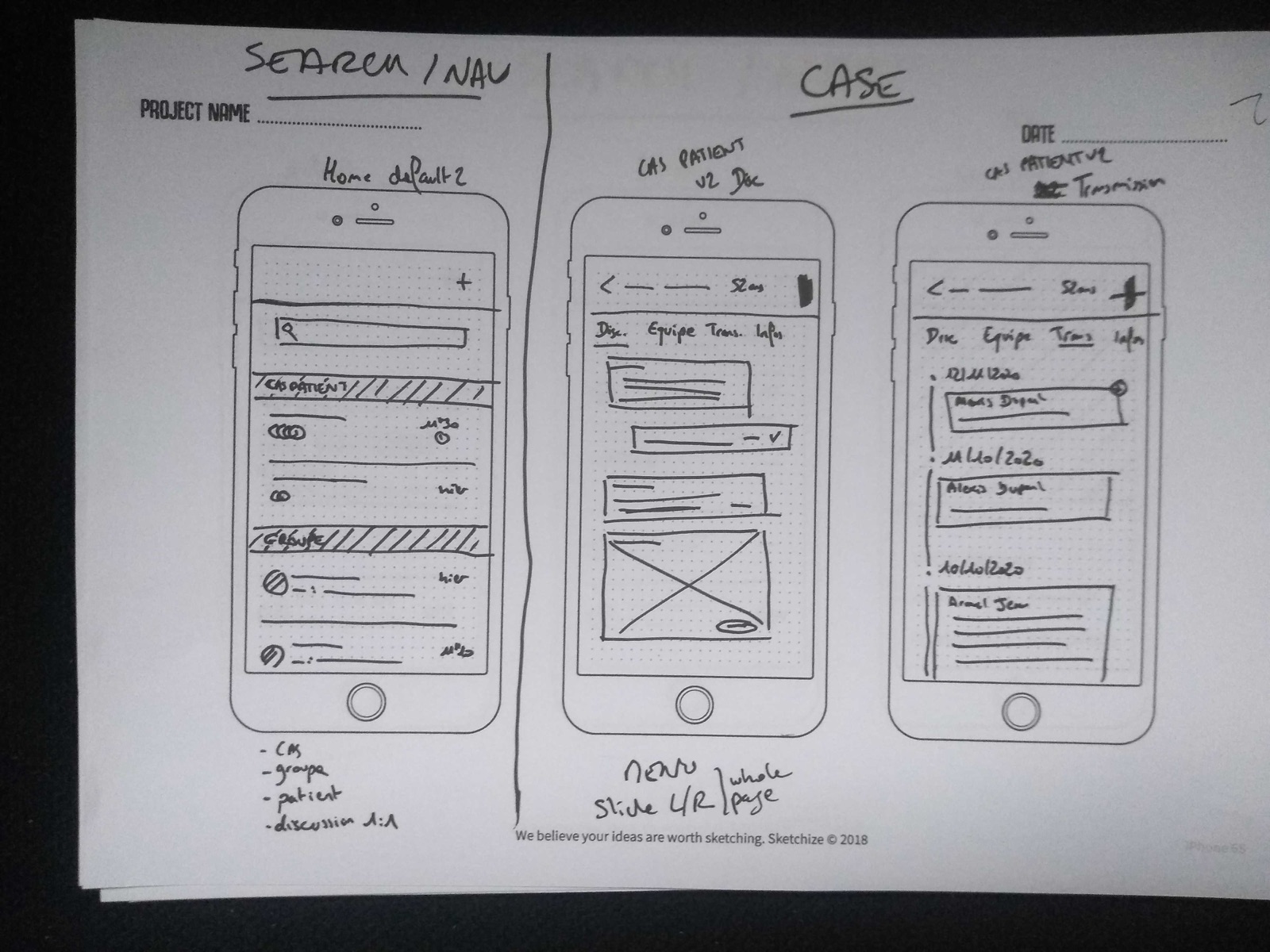
Paper sketches of the mobile app: home with search, patient case and group sections, and a patient case conversation
Paper sketches: navigation and patient case screens.
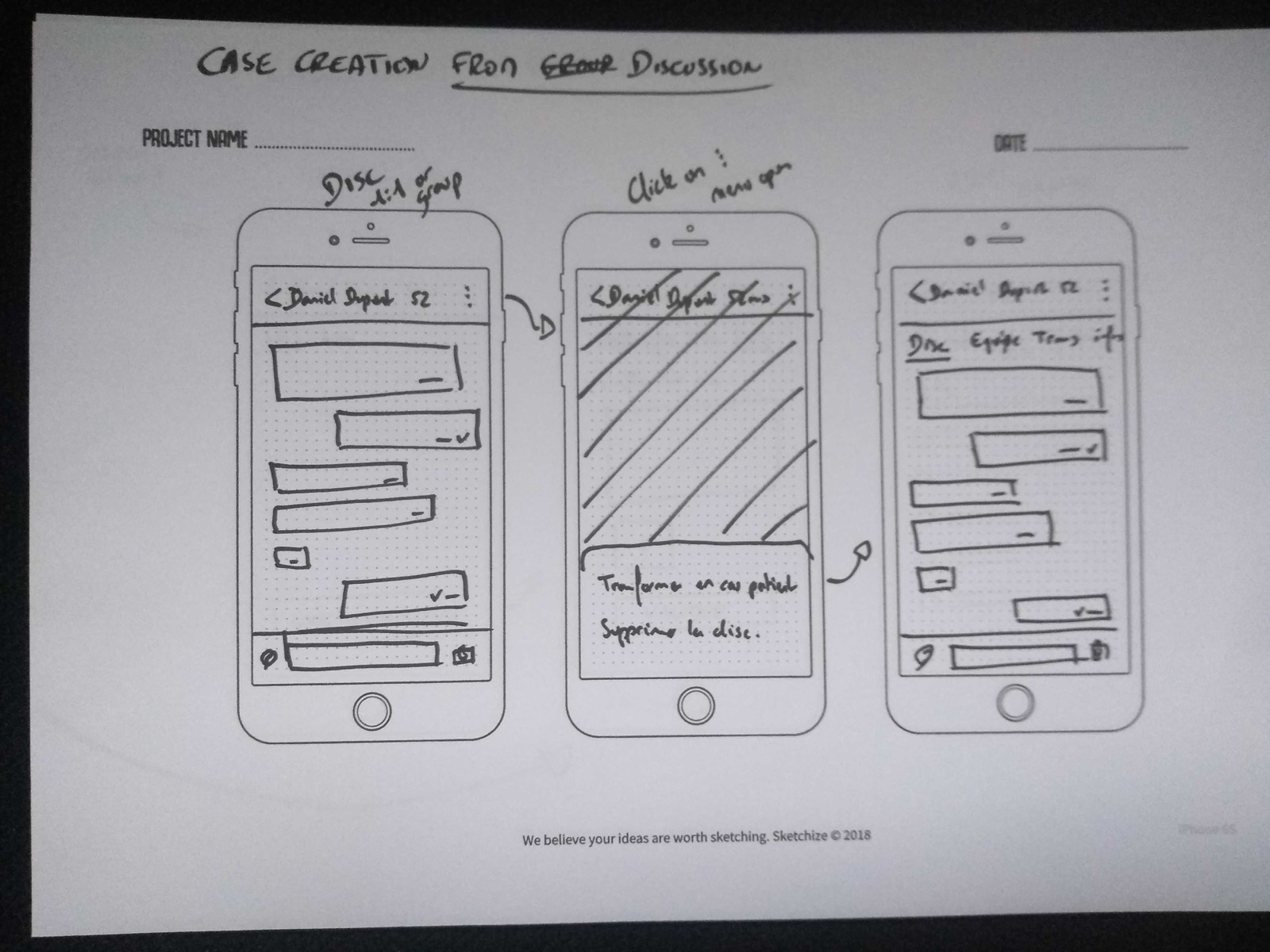
Paper sketches of a flow creating a patient case from an existing group discussion
Creating a patient case from a group discussion.

The solution

Familiar messaging, plus one idea WhatsApp could never have: patient cases.

Doctolib Team looked and felt like the messaging apps doctors already used, on web and mobile, so that nurses and hospital staff on the move had it in their pocket. Underneath, everything was encrypted and limited to verified healthcare professionals.
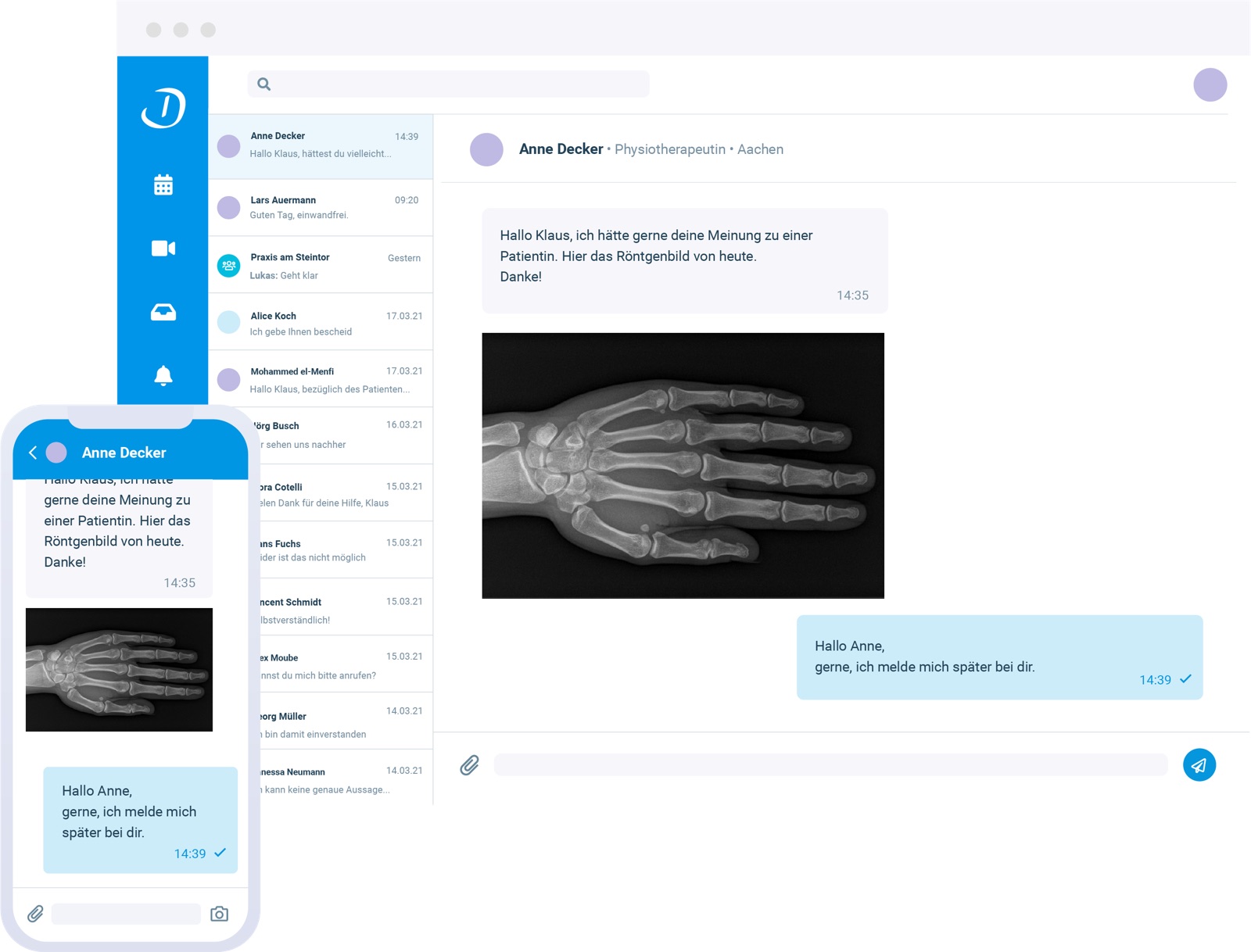
Doctolib Team on desktop and mobile: a physiotherapist shares a hand X-ray with a colleague and asks for their opinion
The X-ray that used to go through WhatsApp, now shared securely, on desktop and mobile.

Key features shipped

  • One-to-one messaging between healthcare professionals, with the simplicity of a consumer app.
  • Groups, including groups created automatically for each organisation, so a practice's team could talk from day one.
  • Document and photo sharing: reports, images and test results, without inbox size limits.
  • Search and invitations: find a colleague by name, specialty or city, or invite them if they're not on Doctolib Team yet. No phone number or email address needed.
  • Practitioner verification and end-to-end encryption, the foundation of trust for a tool that carries patient data.
  • Patient cases: a structured conversation linked to one patient from the creator's patient base, bringing together the GP, the surgeon and the nurse in charge of follow-up. The same people could share several cases for different conditions.
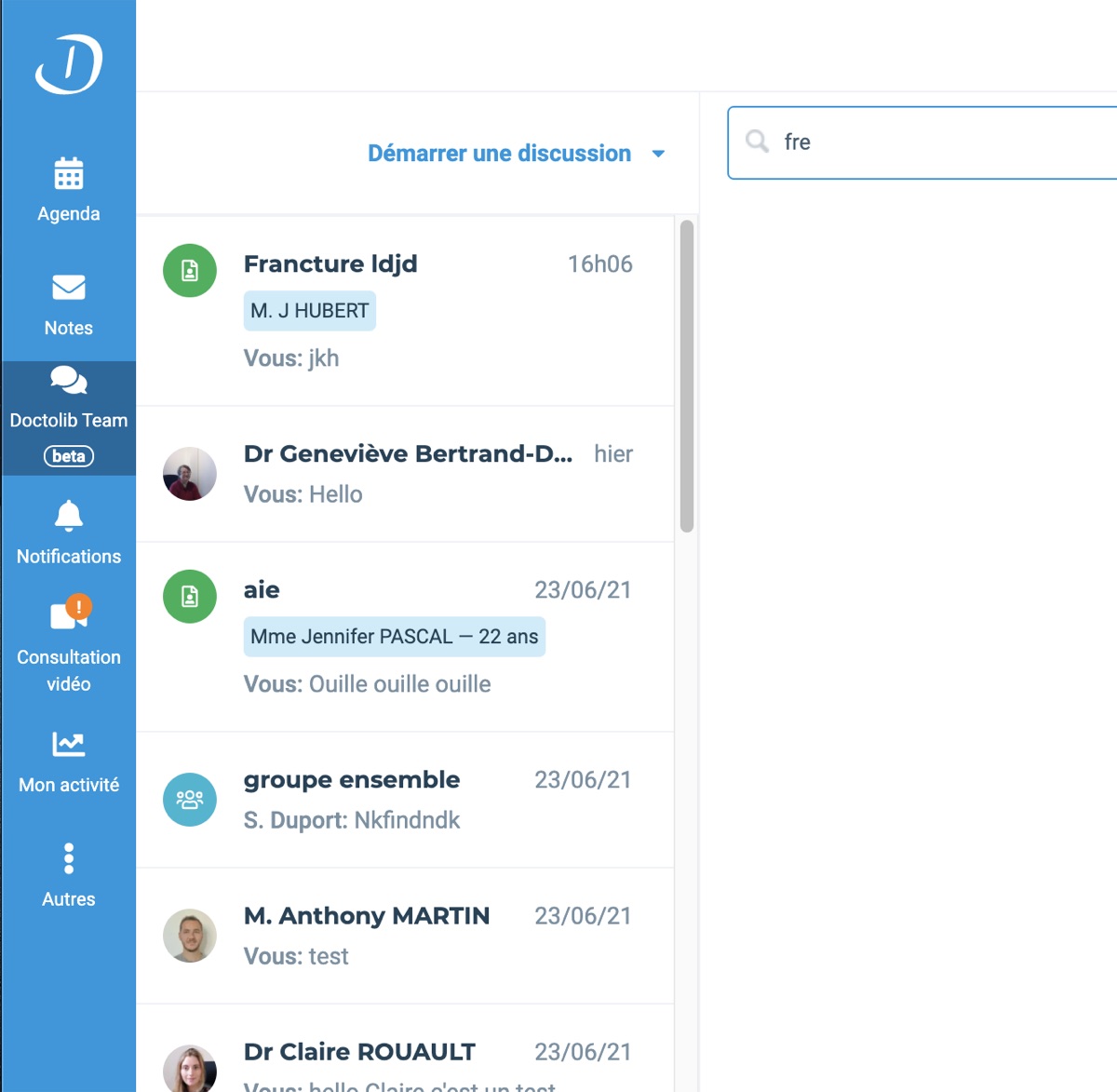
Doctolib Team beta in the Doctolib Pro sidebar: conversation list mixing patient cases tagged with the patient's name, groups and one-to-one discussions
The beta in Doctolib Pro: patient cases, tagged with the patient, next to groups and 1:1 chats.
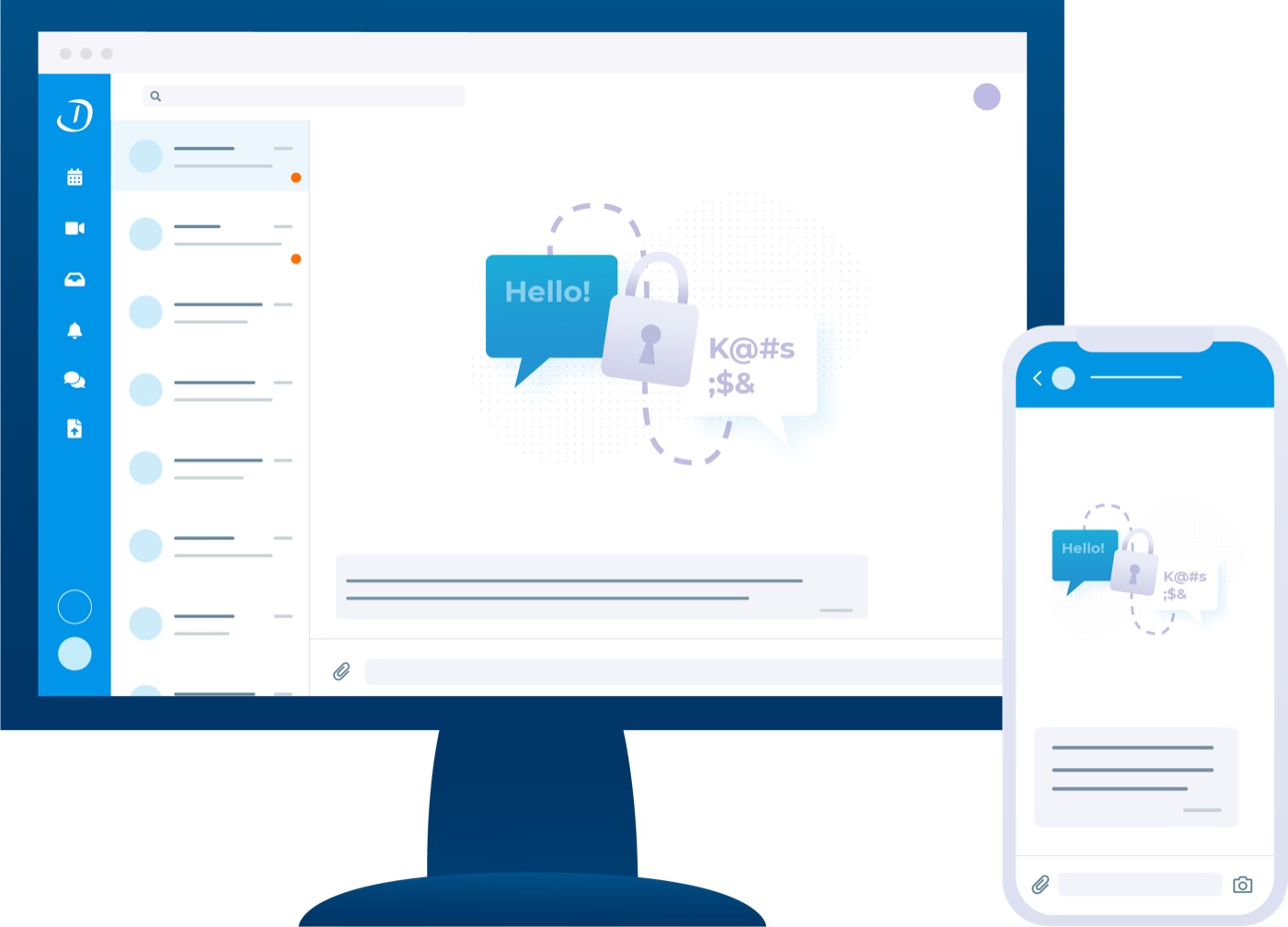
Illustration of an encrypted conversation on desktop and mobile, with a padlock turning a message into unreadable characters
Empty state: encryption made visible.

What the data told us

Being seen was easy. The first message was the hard part.

Inside Doctolib Pro, the product was one click away for every user. Exposure was never the problem. Our first scale analysis, in spring 2021, showed where the funnel really broke.

1 in 2
Activated users opened Doctolib Team
~1 in 8
Sent at least one message
Most
Users who completed verification then sent a message
Verification: trust that costs users
Verifying practitioners was non-negotiable for a tool carrying patient data. But among users who started it, fewer than half completed verification: the others abandoned or failed. Once through, most of them did start messaging. The security layer was also the steepest step of the funnel.
People come for a person, not for a tool
Pioneers and the colleagues they invited generated most of the messages and almost all invitations. Users invited by a colleague converted best: about a third sent a message, against barely 1 in 100 doctors activated in bulk. Later, invited accounts were a small share of accounts but a far larger share of the best users.
An unanswered message ends a conversation, and sometimes a user
In early 2022, about a third of active users had sent only one message in their whole history. For around one in five of them, that message had been left unread or unanswered. Passive users received several messages for each one they sent: the network effect works both ways.
Usage wasn't where we expected it
We designed for doctors who don't know each other. Yet in summer 2021, the large majority of messages stayed inside the same organisation. Most power users wrote in automatic organisation groups and internal direct messages, while patient cases remained marginal. GPs and secretaries made up about half of the best users, but under a third of activated accounts.

Impact

From a few hundred pioneers to tens of thousands of monthly active users.

300K+
Professionals with access in France and Germany (2022)
30K+
Monthly active users, each sending at least one message a month (late 2022)
15K+
Messages a day on average (late 2022)
A rollout at national scale.
In 2022, Doctolib Team reached over 250K professionals in France and close to 80K in Germany. About half of them opened it, and tens of thousands sent messages, including in dozens of French hospitals.
A daily coordination tool.
By late 2022, practitioners created well over a thousand new conversations a day, with four to five people per conversation on average: real team coordination, not just one-to-one chat.
The first days decide everything.
Most messages came from under a fifth of users, and most of the engaged users sent their first message within days of activation. If the first conversation didn't happen early, it rarely happened at all.
Today's Doctolib Connect.
In 2023, Doctolib Team joined forces with Siilo, which opened the Dutch market and brought a tele-expertise and networking platform. Our discovery and usage learnings fed into the combined product, now Doctolib Connect.

What I learned

For a messaging product, the first conversation is the product.

Doctolib Team proved that doctors wanted a secure alternative to WhatsApp. It also showed me where a product designer's effort matters most when a product depends on a network.

1
Design the path to the first message, not just the inbox
Half of users opened the product, about one in eight sent a message. The gap between the two is where design has the most leverage: verification, empty states, a first conversation suggested from day one.
2
Grow through people, not through deployment
A colleague's invitation converted about a third of users, bulk activation barely 1 in 100. Invitations deserve as much design care as the core experience.
3
Let real usage challenge the vision
We bet on patient cases and on connecting strangers. Users first adopted the simplest thing: talking to their own team. Today I would test the differentiating feature against real usage much earlier.
4
Close the loop
An unanswered first message can lose a user for good. Reply reminders and read signals are not details in a messaging product: they are retention features.